
Disaster and Climate Education Network
The Disaster and Climate Education Network (DCEN) is an international network founded by scientists from England, Spain and Germany. The aim of the network is to research and systematically examine the hitherto relatively underestimated interplay between natural hazards, climate risks and education, with a particular focus on resilience, risk awareness and crisis prevention. This knowledge is to be transferred into practice and strategies developed for how educational work can be designed to minimise risk and adapt to climate change. By linking DCEN — in formal education systems as well as civil society contexts — with issues of disaster and climate risk, the network is making an important contribution to making societies more resilient and aware in dealing with crises.
Network facilitators

Elisa Isabel Gavari Starkie, Universidad Nacional de Educación a Distancia, Spain

Kaori Kitagawa, Associate Professor in the Department of Education, Practice and Society, UCL Institute of Education, UK. Her main research interest is participatory approaches to disaster and climate education, particularly co‑learning pedagogies. An advocate of 'everyday-life preparedness'. Faculty of Education and Society, University College London (UCL), Great Britain

Sophie Lacher, M.A., is a Research Associate in Adult Education at the RPTU University of Kaiserslautern-Landau (RPTU). She holds a B.A. in Integrative Social Sciences from the Technical University of Kaiserslautern and an M.A. in Adult Education/Lifelong Learning from Humboldt University, Berlin. Her research focuses on disaster education, biographical research in adult education, the digitalisation of adult education and qualitative social research methods.

José Pastrana Huguet, Professor tutor at the UNED Balearic Islands Associated Center and councilor of the Consell Insular de Menorca. PhD in Education. His research interests focus on sustainability, education, disaster risk reduction, and community roles. He has published articles in indexed journals and participated in national and international conferences.

Matthias Rohs, is Professor of Adult Education at RPTU University of Kaiserslautern-Landau, Founding Member of the Center of Interdisciplinary Disaster Research (CIDR) and Member of the Scientific Advisory Board of the Federal Office for Civil Protection and Disaster Assistance. His research focuses on adult education and learning in formal and informal contexts within the field of disaster research.
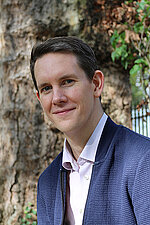
Hans Svennevig, Subject Leader Citizenship PGCE, and Deputy Programme Leader Secondary PGCE in the Curriculum, Pedagogy and Assessment department at UCL Institute of Education. Hans' teaching and research interests are in the connections between Citizenship education, disaster education and peace education. Faculty of Education and Society, University College London (UCL), Great Britain
Activities

First Symposium of DECN
From July 21 to 23, the Adult Education working group at RPTU hosted the Disaster and Climate Education Networks (DECN) symposium. Together with scientists from the UK and Spain, the situation of Disaster Risk Reduction Education in the three participating countries and the resulting need for action were discussed. The exchange was broad-based and covered the entire spectrum from informal learning to formal education in schools and universities.
The DCEN symposium made it clear that education is a central key to social resilience in the face of increasing disasters and the effects of climate change. In times of growing uncertainty, learning processes are needed that enable people to understand risks, act with foresight and develop preventative solutions together. So far, however, the topic has hardly been addressed in education.
Research on education in risk prevention is also still in its infancy - although it provides an essential basis for evidence-based action. The symposium was an important step towards strengthening this field and developing it further on an interdisciplinary basis. The aim of further work is to expand the network and increase cooperation within the framework of joint research projects.
We would like to thank all participants for the inspiring and profitable exchange as well as the support of the IOE - Faculty of Education and Society, University College London and the Center for Graduate Support and Academic Staff Development, University of Kaiserlautern-Landau